
When buying a product, most customers want one simple thing: the best value for their money. But getting better product value is not always about choosing the cheapest option. A low-priced product may look attractive initially, but if it does not perform well, lasts for a short time, or fails to meet your expectations, it may cost you more in the long run.
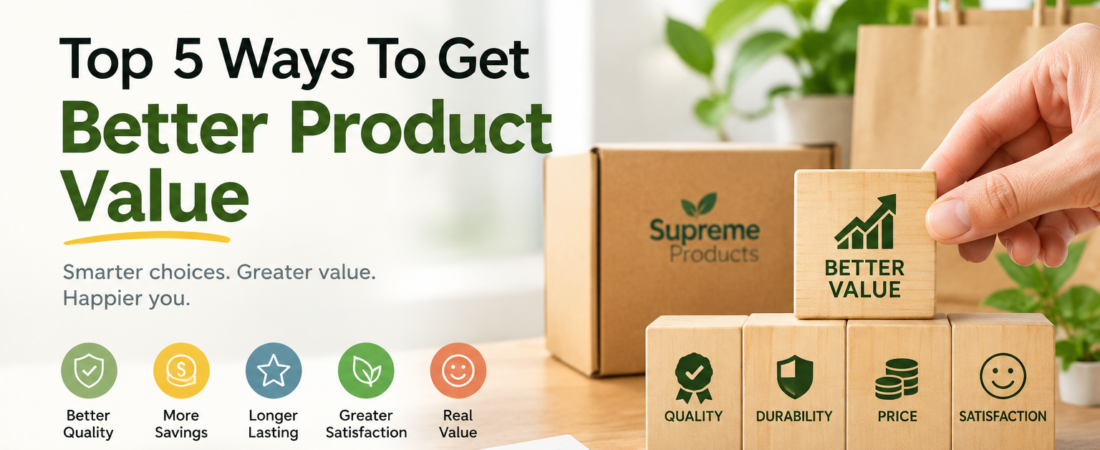
Better product value comes from finding the right balance between quality, price, durability, usefulness, reliability, and customer satisfaction.
Whether you are buying everyday household products, food products, personal-use items, electronics, or other consumer goods, making a thoughtful decision can help you get more value from every purchase.
In this guide, we will explore the top 5 ways to get better product value and make smarter buying decisions.
What Does Product Value Mean?
Product value refers to the overall benefit you receive from a product compared with the money you spend on it.
A product with good value should provide a combination of:
- Good quality
- Reasonable pricing
- Reliable performance
- Useful features
- Good durability
- Consistent results
- Customer satisfaction
For example, imagine you are choosing between two similar products. One costs slightly less, but the other offers better quality, lasts longer, and performs more consistently. The second product may provide better product value, even if its initial price is higher.
This is why value for money should not be confused with the lowest price.
Top 5 Ways To Get Better Product Value
1. Compare Quality Before Comparing Price
One of the most important ways to get better product value is to look at quality before focusing only on price.
Price is easy to compare. Quality requires a little more research.
Before buying a product, consider:
- What materials or ingredients are used?
- Is the product made carefully?
- Does the product meet expected quality standards?
- Is the packaging appropriate and informative?
- Does the product appear reliable?
- Does the brand communicate clearly about the product?
A cheaper product may seem like a better deal, but poor quality can result in frequent replacement, wastage, or dissatisfaction.
For example, if you are purchasing a daily-use product, consistent quality can be more important than saving a small amount at the time of purchase.
The goal should be to identify a product that provides good quality at a reasonable price.
Why Quality Matters
Quality directly affects your overall experience with a product. A well-made product can provide better performance, greater reliability, and increased satisfaction.
Therefore, when comparing products, don’t simply ask:
“Which product is cheaper?”
Instead, ask:
“Which product gives me the most useful benefits for the price I pay?”
This small change in thinking can help you make smarter purchasing decisions.
2. Look Beyond the Initial Price
Another important way to get better product value is to consider the total cost of ownership, rather than only the purchase price.
The initial price tells you how much you pay today. It does not always tell you how much the product will cost you over time.
Consider factors such as:
- How long will the product last?
- Will it require frequent replacement?
- Does it require additional accessories?
- Will maintenance be expensive?
- How often will you need to purchase it again?
- Does it provide enough benefits for its price?
A product that costs slightly more but lasts significantly longer may provide better value than a cheaper product that needs to be replaced frequently.
This is particularly important for products that you use regularly.
Think Long-Term
Smart purchasing means thinking beyond the checkout page.
Instead of focusing only on:
Purchase Price = Value
Think about:
Quality + Durability + Performance + Usefulness + Satisfaction = Overall Product Value
This approach helps you understand the real benefit you are receiving from your purchase.
3. Check Product Reviews and Customer Feedback
Customer reviews can be extremely helpful when evaluating product value.
Reviews can give you an idea of how a product performs in real-world situations. While reading reviews, don’t focus only on the star rating. Look for specific comments about quality, performance, durability, packaging, and customer experience.
Pay attention to:
- Repeated positive comments
- Repeated complaints
- Product quality
- Actual performance
- Durability
- Packaging
- Customer service
- Whether the product matches its description
For example, if several customers independently mention that a product is reliable and performs consistently, that information may help you understand its practical value.
However, don’t make a decision based on one review alone.
Read Reviews Carefully
Not every review provides the same level of useful information. Look for reviews that explain why the customer liked or disliked the product.
A detailed review can tell you much more than a simple statement such as “Good product.”
Also compare feedback from multiple sources whenever possible.
The objective is not simply to find positive reviews. It is to understand whether the product’s actual performance matches your expectations.
4. Evaluate Durability, Usefulness, and Performance
A product can provide better value when it continues to perform well over time.
Before making a purchase, think about how frequently you will use the product and what you expect it to deliver.
Ask yourself:
- Is this product suitable for my needs?
- Will I use it regularly?
- Is it durable enough for its intended purpose?
- Does it provide consistent performance?
- Does it offer features or benefits I actually need?
- Will it continue to be useful over time?
Avoid paying extra for features that you will rarely use. At the same time, don’t choose a product simply because it is inexpensive if it does not meet your basic requirements.
Choose Based on Your Needs
Better product value is personal.
A product that offers excellent value to one customer may not be the right choice for another customer.
For example, someone who uses a product every day may prioritize durability and consistency, while someone who uses it occasionally may prioritize affordability.
Therefore, identify your requirements first and then compare available options.
The right product is not necessarily the cheapest or most expensive. It is the product that best matches your needs and expectations.
5. Choose Brands That Focus on Quality and Customer Satisfaction
The brand behind a product can also influence your overall buying experience.
A trustworthy brand should aim to provide more than just a product. It should focus on quality, consistency, transparency, and customer satisfaction.
When evaluating a brand, consider:
- Does it provide clear product information?
- Is the packaging informative?
- Does it communicate honestly?
- Does it maintain consistent quality?
- Is customer support available when needed?
- Does the brand value customer feedback?
- Does it focus on long-term customer relationships?
A brand that consistently focuses on customer satisfaction can help create greater confidence in your purchasing decision.
Quality, Trust, Value, and Satisfaction
At Supreme Products, these four principles are important considerations when thinking about the customer experience:
Quality • Trust • Value • Satisfaction
These principles represent an important approach to choosing and delivering products that customers can feel confident about.
When customers receive reliable quality and useful value from their purchases, they are more likely to have a positive overall experience.
Bonus Tip: Don’t Buy Just Because Something Is on Sale
Discounts can be attractive, but a lower price does not automatically mean better value.
Before purchasing a discounted product, ask:
- Do I actually need it?
- Is the quality suitable?
- Is the product still useful at the discounted price?
- Does it meet my expectations?
- Would I purchase it without the discount?
A discount can improve value when the product already meets your requirements.
However, buying something you don’t need simply because it is discounted can result in unnecessary spending.
How To Make Smarter Product Buying Decisions
Before purchasing any product, follow this simple checklist:
1. Identify your need
Understand exactly what you are looking for.
2. Compare similar products
Look at quality, features, price, and benefits.
3. Check product information
Read the packaging, specifications, ingredients, or available product details.
4. Review customer feedback
Look for common experiences rather than relying on one review.
5. Consider long-term value
Think about durability, performance, replacement costs, and usefulness.
6. Choose according to your priorities
Select the product that provides the right combination of quality and value for your needs.
This simple process can help you avoid impulse purchases and make more informed decisions.
Why Better Product Value Matters
Getting better product value is important because every purchase represents an investment of your money.
When customers make informed choices, they can potentially reduce unnecessary spending, avoid unsuitable products, and improve their overall shopping experience.
Better product value can mean:
- Better quality
- Greater usefulness
- Longer-lasting performance
- Fewer unnecessary replacements
- Greater satisfaction
- More confidence in purchasing decisions
Ultimately, good value is about getting meaningful benefits from what you buy.
Final Thoughts
Getting better product value doesn’t mean always choosing the cheapest product. It means understanding what you are receiving in return for the money you spend.
By comparing quality, looking beyond the initial price, checking customer reviews, evaluating durability and usefulness, and choosing trustworthy brands, you can make more informed purchasing decisions.
The next time you are comparing two similar products, don’t ask only:
“Which one costs less?”
Instead, ask:
“Which product gives me the right combination of quality, performance, durability, and satisfaction for the price?”
That question can help you move from simply shopping for a price to making a smarter value-based buying decision.
At Supreme Products, our approach is built around Quality • Trust • Value • Satisfaction—because a good product should deliver more than a purchase; it should deliver an experience customers can value.
Choose wisely. Compare carefully. Look for better product value.